
Exercise physiologists
Exercise-based assessment and intervention connected to disability-related physical and functional goals.

Ballarat & surrounding areas
Understand and access appropriate professional support for independence, participation and everyday wellbeing based on individual needs, goals, assessment, NDIS plan and service availability.
The right support for your goals
Individual assessment. Practical strategies. Meaningful progress.
Understanding therapeutic support
Professional supports designed to help participants work towards disability-related goals involving daily function, independence, participation and quality of life.
Not every service suits every participant. Qualified assessment and individual planning help connect the right support with the right need.
Support depends on disability-related needs, goals, functional requirements, approved funding, professional recommendations and availability.
NDIS allied health services
The appropriate allied health professional should be selected according to the participant’s individual needs, goals and relevant professional assessment.
Exercise-based assessment and intervention connected to disability-related physical and functional goals.
Assessment and strategies focused on functional capacity, everyday activities, participation and independence.
Professional support that may address movement, mobility and physical function within scope.
Assessment and support for relevant communication or swallowing needs within professional scope.
Appropriate psychological assessment and support related to eligible disability support needs.
Dietitians and other appropriately qualified professionals may support relevant participant goals.
Each profession has a distinct scope, registration or qualification pathway. Specific services depend on qualified-provider and service availability.
How allied health may help
Therapeutic support may provide assessment, interventions or practical strategies when professional expertise is needed.
Assessment may identify targeted areas for support.
Interventions may develop or maintain everyday skills.
Exercise-based support may address strength, mobility or fitness goals.
Strategies can make relevant daily activities more manageable.
Therapy may contribute to recreation, education, work or community goals.
Recommendations can be incorporated into suitable everyday routines.
NDIS exercise physiology
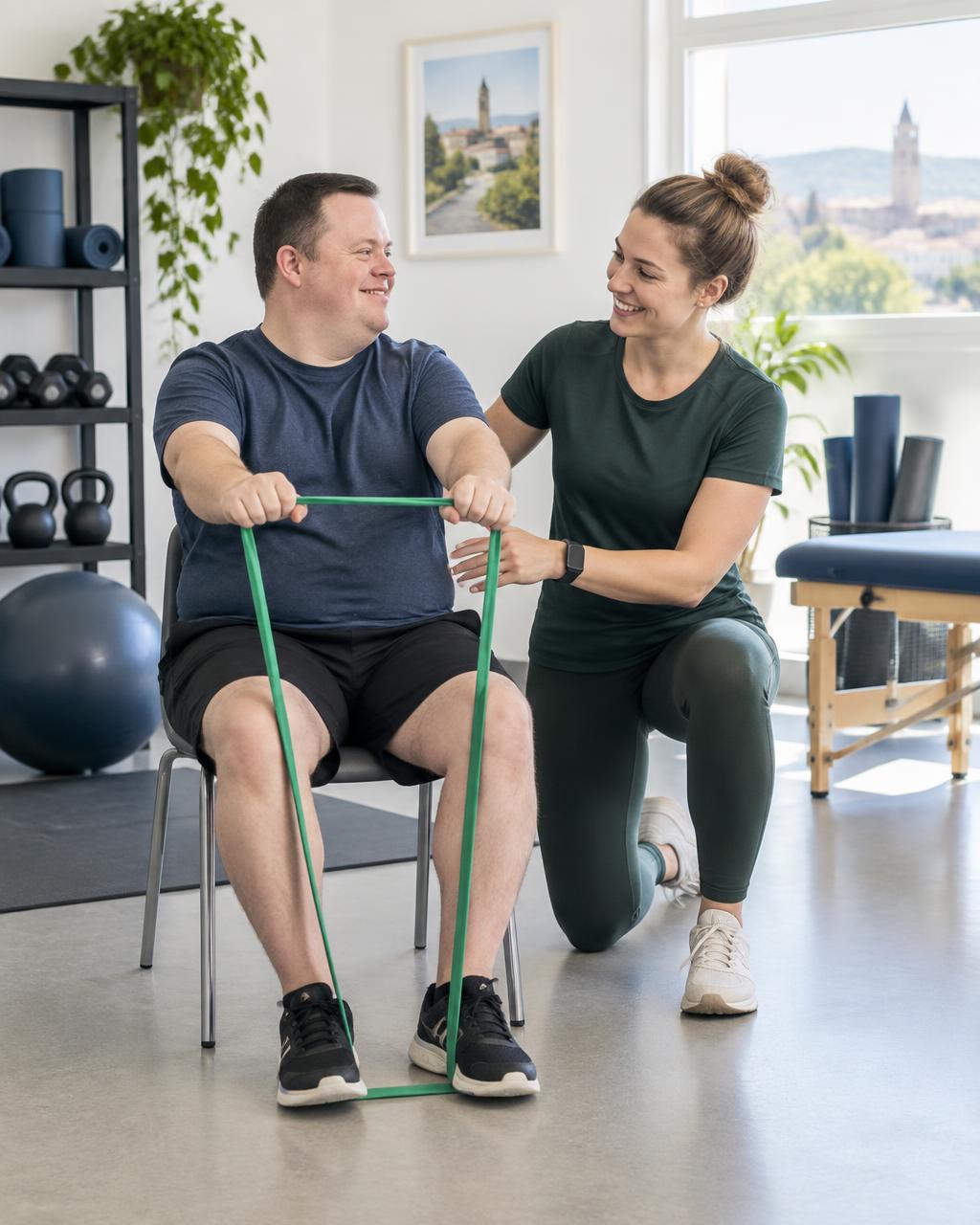
An accredited exercise physiologist may assess physical capacity and develop an appropriate exercise program informed by disability, abilities, preferences, goals and support requirements.
Exercise physiologist
Exercise-based support should connect directly to individual therapeutic or functional objectives and remain within the professional’s scope.
Understand the distinction
The purpose, qualifications, disability relationship and NDIS requirements determine whether exercise is a therapeutic support.
General fitness
Usually focuses on general fitness and exercise instruction. It is not automatically a therapeutic or NDIS-funded support.
Disability-related outcomes
Delivered by an appropriately qualified professional and connected to assessed disability-related functional or therapeutic goals.
Before arranging support, consider its purpose, professional qualifications, disability relationship, NDIS requirements and fit with the participant’s plan.
Participant goals
Goals may focus on physical capacity, everyday independence, confidence or meaningful community participation. The approach should follow individual circumstances and professional assessment.
A clear goal helps identify the most relevant professional and support approach.
How therapeutic support works
A considered process helps match participant needs with the right professional support.
Consider movement, independence, physical capacity, daily activities or participation.
Tell us the therapeutic or allied health support you are considering.
The right discipline depends on your goals and individual needs.
Where required, a qualified professional assesses needs and suitable interventions.
The professional shapes support around assessment findings and participant goals.
Support may be reviewed to understand whether it remains appropriate and useful.
Why Aseelam Care
We help participants understand their options while keeping individual needs, goals and professional requirements central.
We focus on the individual rather than a standard approach.
Support should connect with meaningful participant goals.
We support Ballarat and surrounding communities, subject to availability.
With consent, therapeutic services can connect with a broader support network.
We help make options and next steps easier to understand.
Appropriate support may contribute to confidence, participation and independence.
Professional outcomes
Qualified assessment and interventions focused on therapeutic, functional or capacity-building goals.
Professional health-related needs may also connect with Community Nursing Care.
Everyday assistance
Support with everyday activities, community participation, household tasks, personal activities and other approved needs.
Explore Disability Support Services, Personal Care and Household Tasks.
Families and support networks
With participant consent, communication may involve the people and professionals supporting everyday routines and therapeutic goals.
Coordinated participation
Appropriate coordination can help translate professional strategies into practical routines while preserving participant choice.
Support Coordination may assist with provider connections, while Group & Centre-Based Activities can support suitable participation goals.
Recommendations affecting accessibility may also connect with Home Modifications.

Local therapeutic support
We support participants across Ballarat and surrounding communities, subject to individual requirements, appropriate professional involvement and service availability.
Related support
Therapeutic support may form one part of a participant’s broader plan and everyday support arrangements.
Participant reviews
Feedback shared by participants and families we support across Ballarat.
Google Reviews
Salima Mahos
Local Guide · Ballarat
Aseelam Care is indeed a good organisation when it comes to providing support with Group and Centre-based activities. Their staff helped me take part in various group-based tasks and complete them flawlessly.
Imad Al-Lami
Local Guide · Ballarat
With the help of Aseelam Care, managing my NDIS funding has become so much easier now. Besides, the organisation also provided me with the best support workers.
Damir Cascovik
Local Guide · Ballarat
Thanks to Aseelam Care, with their support, accomplishing household tasks has become a breeze. So, I would suggest participants requiring household tasks support to take up the care services provided by this organisation.
Common questions
Clear answers about allied health, exercise physiology, funding and getting started.
NDIS therapeutic supports are professional supports designed to help eligible participants work towards disability-related goals involving functional capacity, independence, participation and everyday activities.
It is a service provided by an appropriately qualified allied health practitioner where support is relevant to disability-related needs and applicable NDIS requirements.
Depending on needs, funding and availability, participants may access occupational therapy, physiotherapy, exercise physiology, speech pathology, psychology, dietetics or other relevant professions.
An exercise physiologist assesses physical capacity and develops appropriate exercise-based interventions based on individual needs, goals and professional assessment.
Exercise physiology may be funded where it meets applicable NDIS requirements and relates to the participant’s disability and goals. Individual funding arrangements must be considered.
No. Personal training and exercise physiology are different. Exercise physiology is delivered by an appropriately qualified professional and may involve therapeutic disability-related interventions.
It may support goals involving movement, strength, balance, mobility or physical capacity where appropriate following professional assessment.
Requirements vary by profession and service. Ask the relevant provider whether a referral, assessment or supporting information is required.
Depending on the professional, participant needs, clinical suitability and service arrangements, some therapeutic services may be available at home or another appropriate setting.
Specific services depend on current arrangements, suitably qualified professionals and availability. Contact us to discuss the support you require.
Talk to Aseelam Care
Tell us what you want to achieve and the support you are considering. We can help you understand relevant options and the next steps.
Aseelam Care — participant-focused support connected to meaningful goals.
Quick enquiry
Leave your details and we will get back to you about the support you are looking for.
Prefer to talk? Call 1300 412 669